From Phone Calls to a Full Digital Platform
Three interconnected systems. One unified operation. Zero manual dispatch.
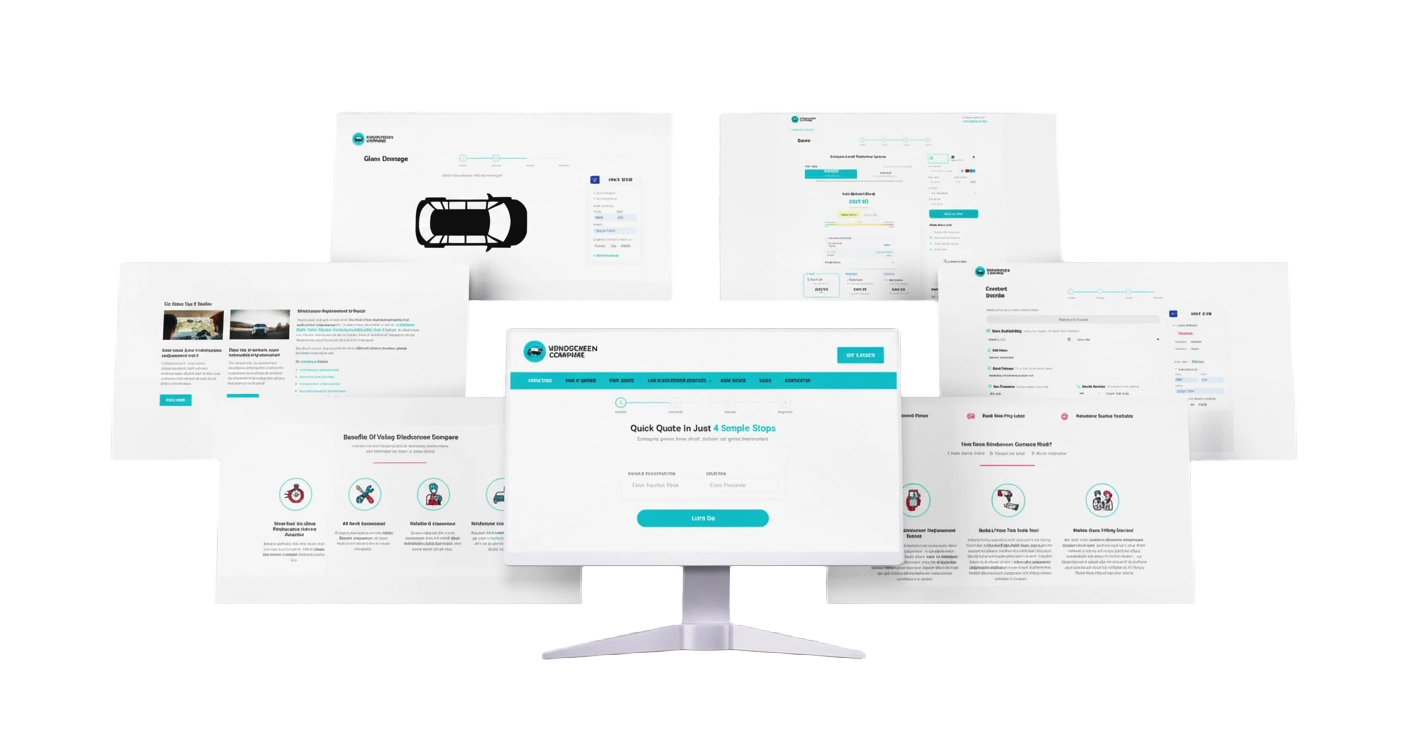
Windscreen Compare was doing real business — but losing it by the call. Every quote meant a phone conversation, manual pricing lookups, and a technician dispatched over WhatsApp. There was no single source of truth for anything. We came in and rebuilt the entire operation as a connected digital platform.
The business had no digital infrastructure to speak of. Customer quotes were calculated manually by staff on the phone using printed pricing sheets that were regularly out of date. Once a quote was accepted, a technician had to be found and dispatched manually — over WhatsApp group chats, with no tracking, no confirmation flow, and no fallback if a technician went quiet.
The internal team had no unified view of bookings, revenue, technician performance, or customer history. Every piece of information lived in someone's head, a spreadsheet, or a text thread. At low volume this was survivable. At the volume they were growing toward, it was a wall.
We broke the problem into three systems that needed to exist and talk to each other: a customer-facing booking flow, a technician management portal, and an internal operations layer. Each one was built independently but designed from the start to share a single data layer.
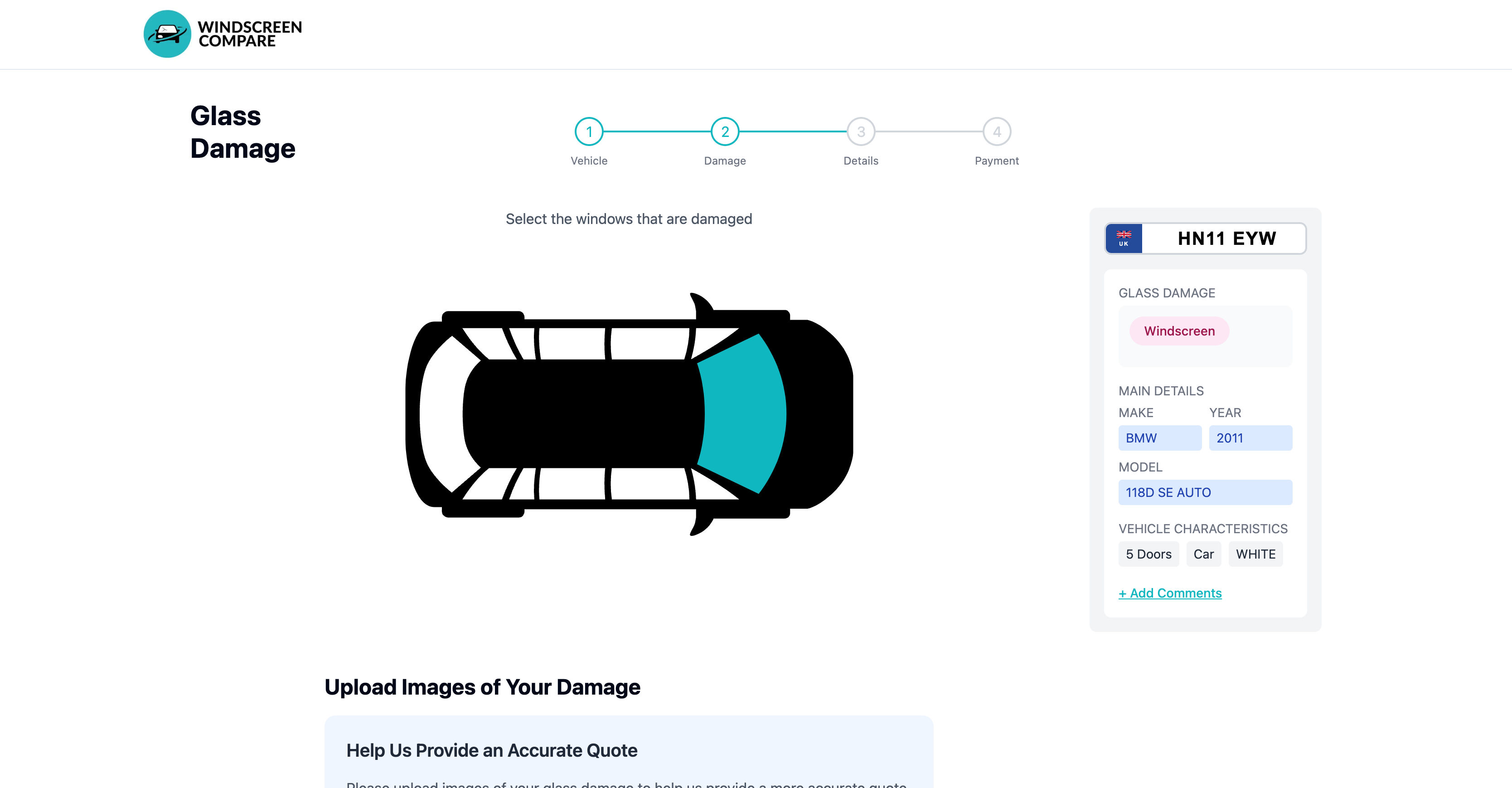
Quote to booking in under 90 seconds
The B2C platform starts with VRN lookup — the customer enters their vehicle registration, the system queries the DVLA API, retrieves the vehicle spec, and immediately runs it through a proprietary pricing model built in Python using a Random Forest algorithm trained on historical job data and live distributor pricing from Pugh's, Master Autoglass, and National Windscreens.
The customer gets an instant, accurate quote in seconds. Stripe handles the checkout. The whole flow from landing page to confirmed booking takes under 90 seconds — no phone call, no hold music, no manual pricing lookup.
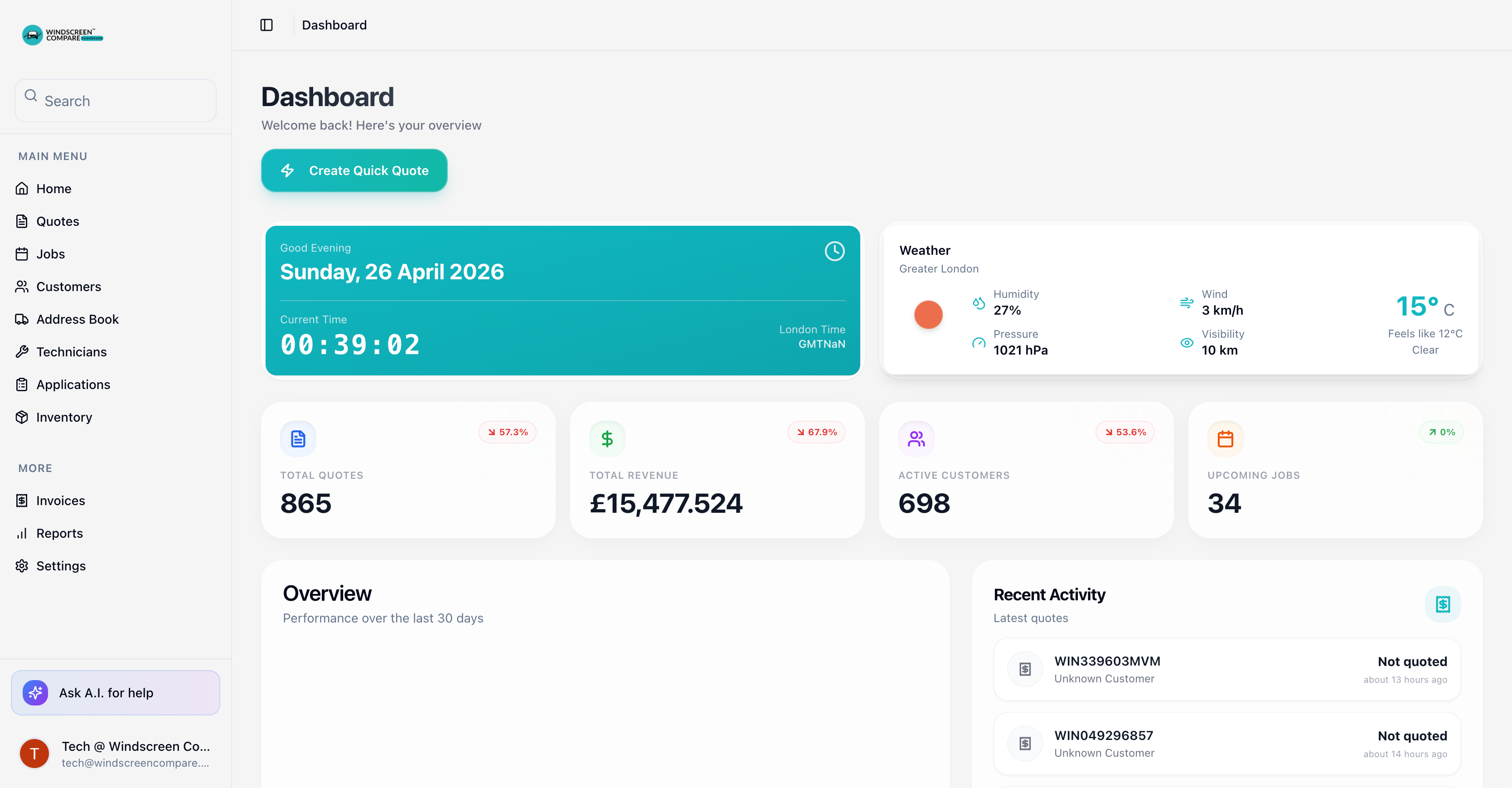
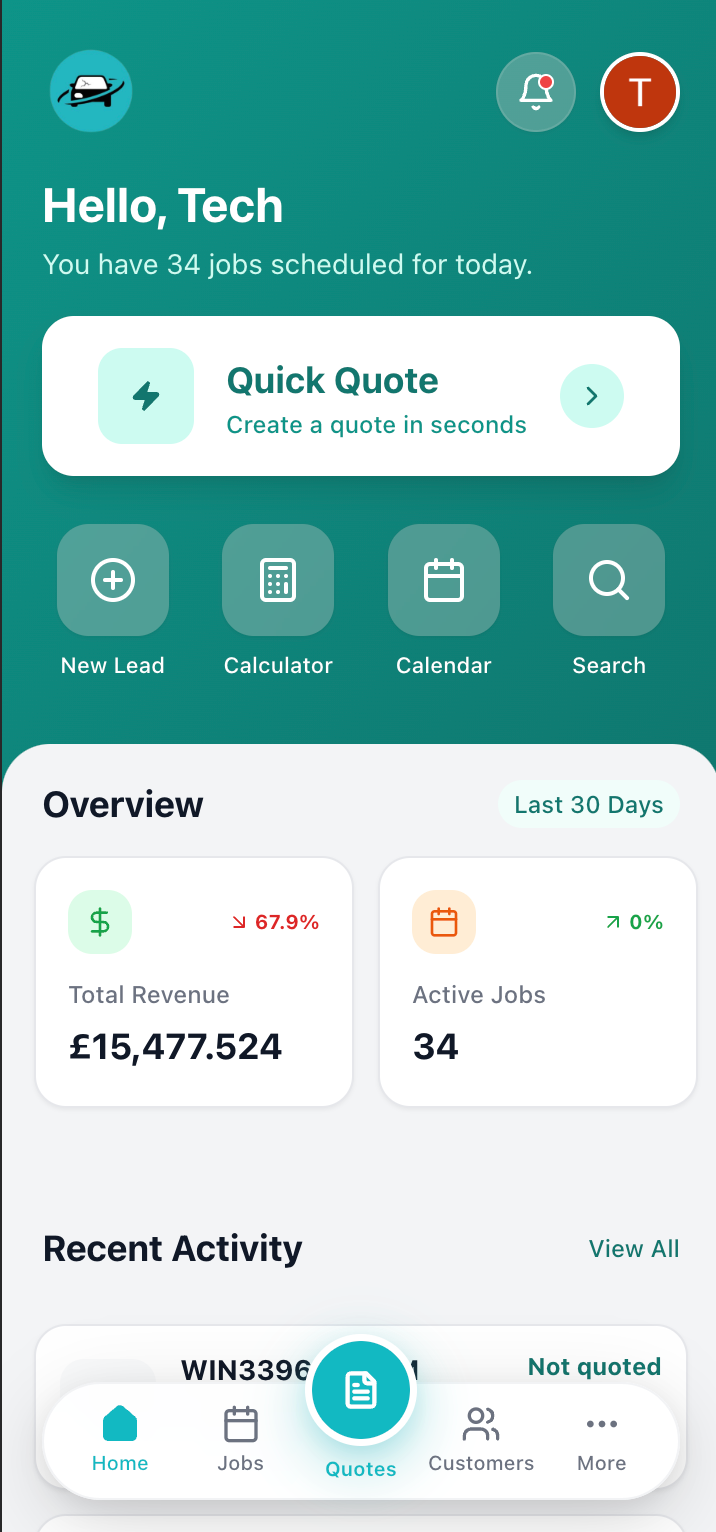
One screen to run the entire business
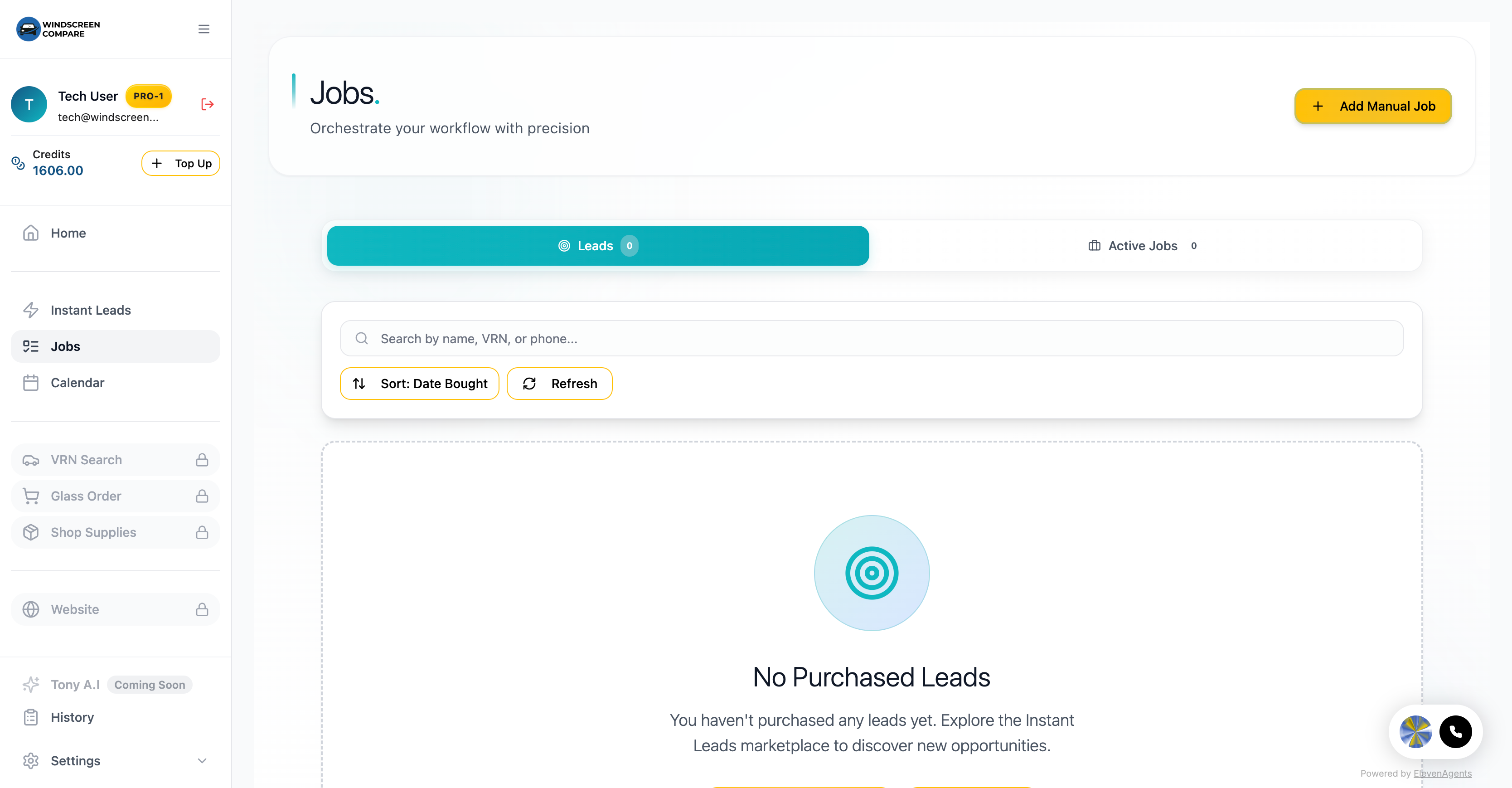
The internal CRM gives the Windscreen Compare operations team a unified view of everything: live bookings board, technician performance analytics, customer profiles, revenue tracking, and a distributor pricing comparison module.
At the centre sits Tony AI — a voice agent built on GPT-4, Whisper, and ElevenLabs that handles inbound customer enquiries by phone, logs full call transcripts, and can book jobs autonomously. The ops team's job went from coordination to oversight. The mobile companion keeps them connected in the field.
Real-time dispatch, zero manual coordination
The technician B2B portal is a separate authenticated React application. Technicians receive real-time job notifications via WebSockets, manage their availability through a calendar interface, accept or decline jobs, upload compliance documents, and track earnings — all in one place.
When a customer books, the right technician is notified immediately without any human in the middle. The three systems — B2C booking, technician portal, and internal CRM — share one Node.js API and one PostgreSQL database. Every action in one surface is immediately reflected across the others.
How the systems connect
Three products, one data layer, zero manual handoffs.

Built to last, not just to launch
Every technology picked for what it does in the system — not for the tag it makes.
Average quote time dropped from 8 minutes on the phone to under 90 seconds online. The technician dispatch process that used to require a human coordinator now runs automatically — a customer books, the right technician is notified in real time, and the job is confirmed without a single manual step.
Tony AI handles a meaningful share of inbound enquiries autonomously, logging every interaction and booking jobs without human involvement. The ops team now manages the entire business — customers, technicians, revenue, and supplier pricing — from a single screen. The infrastructure that used to be a ceiling is now a foundation they can grow on.




Have a project in mind?
We keep our client list intentionally small so every project gets the full team. If you're ready to build something that actually works — not just looks good in a demo — let's talk.